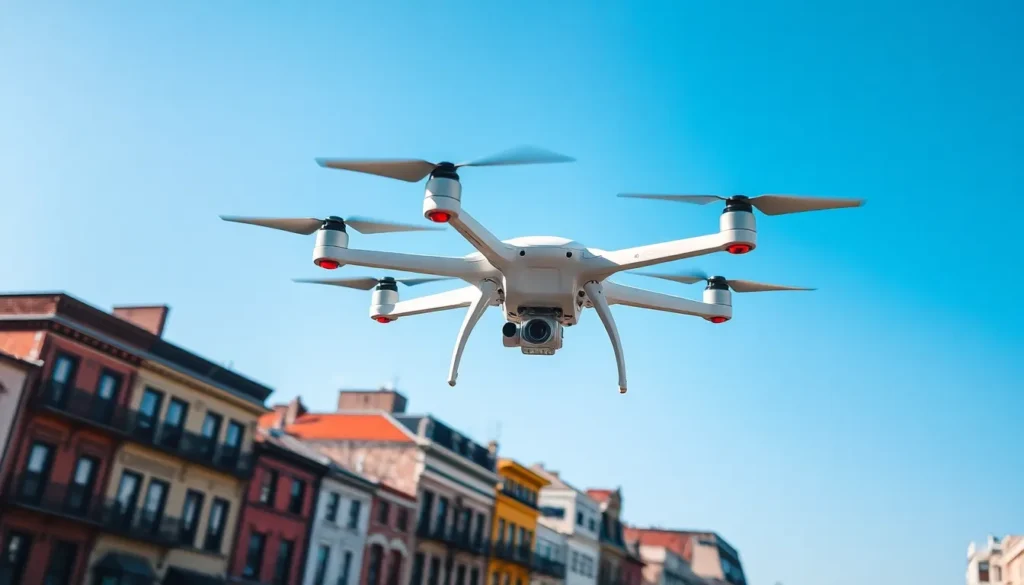
In a world where flying cars are still a dream, octocopter drones are the closest thing we’ve got to personal aerial vehicles. With their eight propellers buzzing like a swarm of caffeinated bees, these drones are revolutionizing everything from photography to delivery services. Who wouldn’t want a bird’s-eye view of their backyard BBQ or a pizza delivered by a flying robot?
Overview of Octocopter Drones
Octocopter drones feature eight rotors, providing stability and control in flight. This design allows for increased payload capacity compared to quadcopters and hexacopters. Industries adopting octocopters range from film production to agriculture, benefiting from enhanced aerial capabilities.
Photography and cinematography industries utilize octocopters to obtain unique angles and smooth shots. Capable of carrying high-resolution cameras, these drones capture stunning visuals with precision. Delivery services also explore octocopter technology to transport goods, offering potential solutions for rapid logistics.
Operators experience improved safety and redundancy with octocopter designs. If one rotor fails, the remaining rotors maintain flight stability, minimizing risks in various applications. Octocopters are also equipped with advanced navigational systems, enabling autonomous flight paths and real-time obstacle avoidance.
Different models cater to specific user needs; some prioritize payload capacity while others focus on flight time. Businesses invest in octocopters for surveying and mapping purposes, achieving accurate data collection over large areas.
Overall, octocopter drones stand out in innovation and functionality, helping to meet the ever-evolving demands of modern industries. Exploration into new applications continues, reinforcing the critical role these drones play across sectors.
Key Features of Octocopter Drones
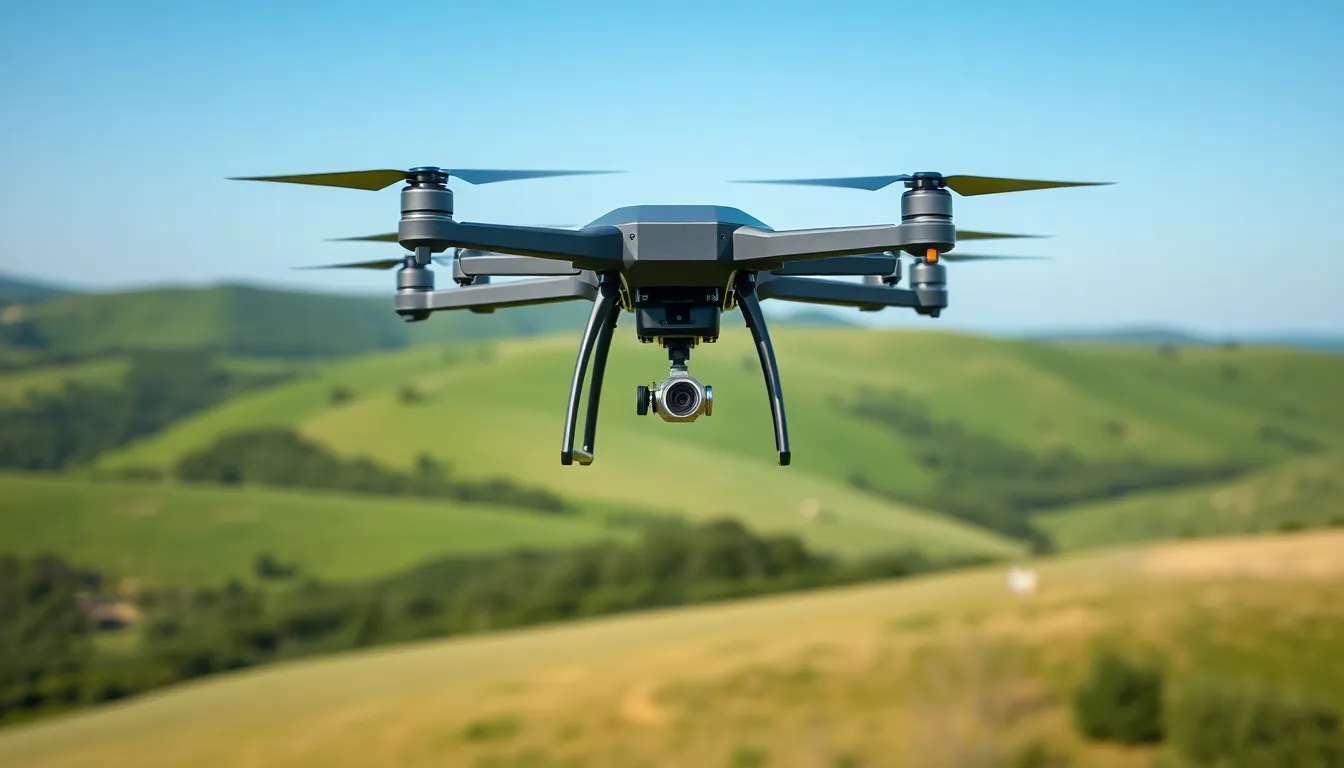
Octocopter drones exhibit remarkable characteristics that set them apart in various applications. Key features include enhanced stability and substantial payload capacity.
Enhanced Stability
Eight rotors contribute to an octocopter’s stability during flight. This configuration ensures greater control, allowing pilots to maneuver seamlessly in diverse environments. Despite possible rotor failure, these drones maintain good flight performance, showcasing their reliability. Operators can confidently navigate tight spaces and adverse weather conditions without losing control. The design balances flexibility and robustness, which proves invaluable in critical missions such as search and rescue operations. With advanced stabilization technology, octocopters outperform quadcopters and hexacopters in terms of reliability, establishing them as the preferred choice for pilots across industries.
Payload Capacity
Increased payload capacity distinguishes octocopter drones from other types of UAVs. These drones can carry heavier equipment and larger cameras, making them suitable for demanding tasks like aerial surveying and high-resolution imaging. Operators find value in the ability to transport various payloads, which enhances functionality across sectors like agriculture and film production. While some models focus specifically on maximizing payload, others enhance flight time or endurance. This flexibility allows users to select an octocopter that aligns with their operational needs. Payload versatility positions octocopters as essential tools for businesses seeking efficiency and effectiveness in their aerial operations.
Advantages and Disadvantages
Octocopter drones offer distinct advantages and disadvantages that impact their use across various industries.
Pros of Octocopter Drones
Enhanced stability results from eight rotors, allowing for smooth flight in turbulent conditions. Greater payload capacity enables these drones to carry heavier cameras and equipment, ideal for high-quality photography and videography. Advanced navigational systems provide autonomous flight capabilities, improving efficiency in tasks like aerial surveying and delivery. Safety features include redundancy; even if one rotor fails, remaining rotors sustain flight stability. Versatility stands out, with applications ranging from agricultural monitoring to search and rescue missions. Lower maintenance costs arise from the durable construction of many octocopter models, making them a cost-effective choice for businesses.
Cons of Octocopter Drones
Increased complexity accompanies the octocopter design, requiring skilled operators for effective handling. Higher initial costs can deter potential users; purchasing octocopters often involves significant investment. Weighing more than quadcopters and hexacopters, these drones may face restrictions on where they can operate. Battery life can also be a limitation; heavier payloads reduce flight duration significantly. Noise generated during operation might create disturbances in sensitive environments. Finally, regulatory challenges may affect flight permissions, especially in urban settings or near airports.
Applications of Octocopter Drones
Octocopter drones are making waves across multiple sectors. Their unique capabilities offer innovative solutions, addressing various operational needs.
Aerial Photography and Videography
Aerial photography thrives with octocopter drones. Capturing breathtaking visuals becomes easier thanks to high-resolution cameras mounted on these advanced machines. Filmmakers utilize octocopters to achieve dynamic shots that were previously difficult to obtain. Businesses in real estate leverage this technology to provide stunning property images from unique angles. Event planners benefit too, as these drones deliver captivating aerial views of gatherings. The ability to stay stable in windy conditions enhances the quality of visuals. Additionally, versatility allows for different camera configurations, catering to specific project requirements.
Search and Rescue Operations
Search and rescue missions utilize octocopter drones for their exceptional design. Enhanced stability proves vital when navigating challenging environments. In emergency situations, rapid deployment of these drones saves crucial time. Equipped with thermal imaging cameras, octocopters can locate individuals in difficult-to-access areas. They provide real-time data, improving situational awareness for ground teams. Safety is prioritized since these drones can operate effectively in adverse weather conditions. Incorporating GPS technology ensures accurate mapping of search zones, increasing operational efficiency. Their flexibility enhances teamwork during critical missions, reinforcing the importance of aerial support in life-saving operations.
Comparison with Other Drone Types
Octocopter drones stand out against quadcopters and hexacopters in several ways. With eight rotors, octocopters demonstrate superior stability and control during flight. This distinct advantage proves crucial when carrying heavier payloads, a common requirement in professional settings such as cinematography and surveying.
Payload capacity directly affects performance. Octocopters accommodate larger cameras and equipment compared to quadcopters, which typically have only four rotors. Hexacopters, while offering more stability than quadcopters, still fall short of the octocopter’s capabilities when handling substantial loads.
In terms of safety, octocopters offer redundancy that enhances operational security. The loss of a rotor does not equate to immediate loss of control. Other drones might face severe issues if a rotor fails, emphasizing the octocopter’s advantage in critical missions.
Battery life represents another point of comparison. Larger payloads on octocopters may lead to limited flight time. This limitation suggests careful planning is necessary for mission execution. Conversely, lightweight quadcopters often enjoy extended flying durations, making them suitable for less demanding tasks.
Noise levels vary significantly among drone types. Octocopters tend to be noisier than quadcopters due to their larger rotor count. Noise may pose challenges in urban settings or environments sensitive to sound, influencing choice based on operational context.
Regulatory factors also play a role in drone selection. Approval for octocopter flights may differ from those for quadcopters and hexacopters. Operating rules can affect usage at events or in residential areas, reinforcing the importance of understanding local regulations.
Overall, while each drone type serves unique purposes, octocopter drones excel in stability, payload capacity, and safety. These features cater effectively to industries requiring high-performance aerial solutions.
Octocopter drones are redefining aerial capabilities across various industries. Their eight-rotor design not only enhances stability but also allows for greater payload capacity, making them indispensable for tasks requiring precision and reliability. As sectors like photography, agriculture, and logistics continue to adopt these advanced drones, their potential for innovation remains vast.
While challenges such as regulatory hurdles and operational complexity exist, the benefits far outweigh the drawbacks. These drones offer solutions that enhance efficiency and effectiveness in critical operations. With ongoing advancements in technology, octocopters are set to play an even more significant role in shaping the future of aerial applications.