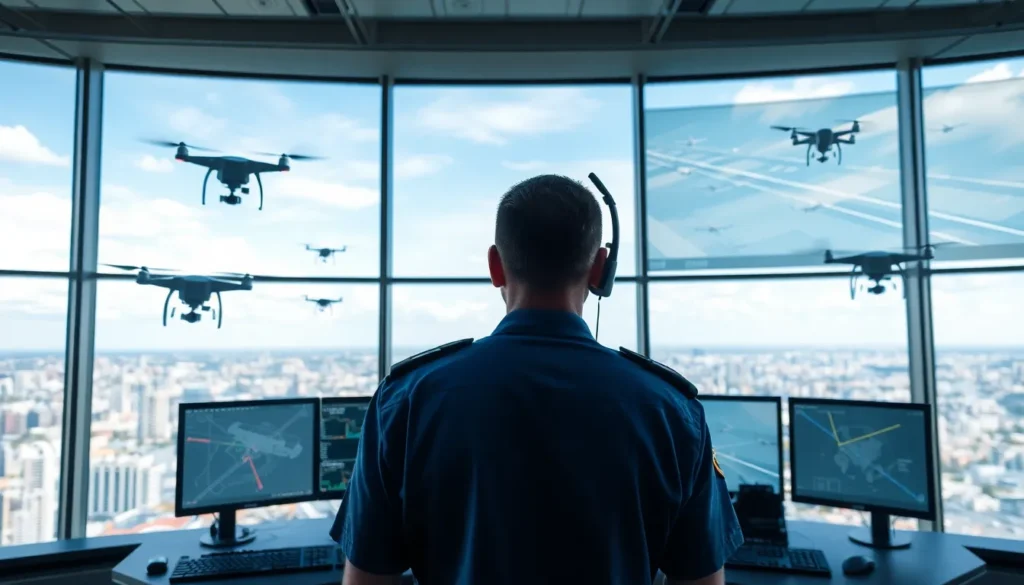
As drones buzz around like caffeinated bees, the skies are becoming a crowded playground. With the rapid rise of drone technology, integrating these flying gadgets into existing air traffic systems isn’t just a good idea—it’s essential. Imagine a world where drones and planes share the sky without turning it into a scene from an action movie.
Overview of Drone Air Traffic Integration
Drones are becoming common in various sectors, including delivery, agriculture, and surveillance. The integration of drone operations into existing air traffic management systems is crucial for public safety and efficient airspace use. Authorities aim to create a unified traffic management system that accommodates both manned and unmanned aircraft.
Current initiatives involve developing Unmanned Aircraft System Traffic Management (UTM) systems. Such systems facilitate the safe navigation of drones, allowing them to perform tasks without hindering traditional flights. They rely on real-time data, enabling drones to communicate with ground control and other aircraft effectively.
Safety measures play a vital role in this integration. Regulatory agencies enforce compliance with flight rules, ensuring that drones maintain safe distances from people and manned aircraft. These regulations prevent collisions and maintain order in shared airspace.
Collaboration among various stakeholders is essential. Technology providers, regulatory agencies, and aviation authorities work together to establish standards for drone operations. This collective effort ensures a robust system that fosters innovation while prioritizing public safety.
Moreover, the integration process requires advanced technology. GPS, artificial intelligence, and machine learning enhance drone navigation and decision-making. These technologies allow drones to adjust autonomously to dynamic conditions, improving overall air traffic efficiency.
Integrating drones into air traffic systems involves collaboration, regulatory compliance, and advanced technology. Each element contributes to creating a safe and efficient framework for future airspace sharing.
Current Technologies in Drone Air Traffic Management
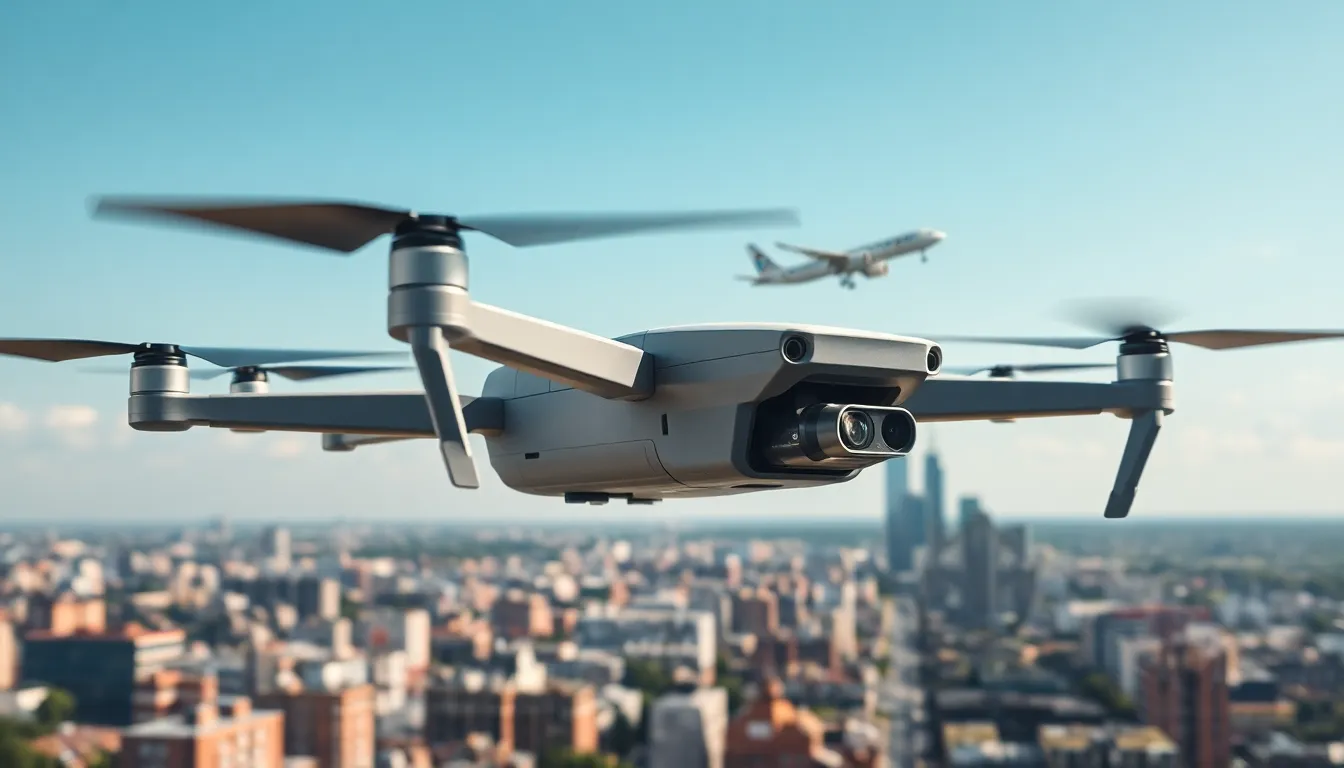
Drone air traffic management relies on innovative technologies to ensure safe and efficient operations. Key advancements in sensor technologies and communication protocols enhance drone navigation and interaction with air traffic systems.
Sensor Technologies
Sophisticated sensors play a vital role in drone navigation. Camera systems provide visual data for obstacle detection, while LiDAR and radar technologies enhance environmental awareness. These sensors allow drones to adapt their flight paths in real time, minimizing collision risks. Additionally, GPS systems offer precise location tracking, ensuring accurate navigation in crowded airspaces. Sensor fusion integrates data from multiple sources, improving situational awareness and decision-making capabilities.
Communication Protocols
Effective communication protocols are essential for integrating drones into air traffic management systems. Various systems, such as Automated Dependent Surveillance-Broadcast (ADS-B), enable real-time data sharing between unmanned vehicles and traditional aircraft. These protocols facilitate seamless coordination, allowing drones to receive updates about nearby air traffic and changing conditions. The use of 4G and 5G networks enhances connectivity, ensuring reliable data transfer. Standards for communication further enhance interoperability, enabling drones to communicate effectively with ground control and other aircraft.
Regulatory Framework for Drone Operations
The regulatory framework for drone operations plays a crucial role in ensuring safety and efficiency. Comprehensive guidelines establish how drones integrate into current air traffic systems.
FAA Regulations
FAA regulations govern drone operations within the United States, emphasizing safety and operator compliance. These regulations include requirements for remote pilot certification and registration of unmanned aircraft. Furthermore, compliance mandates maintaining visual line-of-sight and limitations on altitude and airspace. Enforcement of regulations helps prevent collisions between drones and manned aircraft, ensuring public safety. FAA is actively updating regulations to accommodate evolving technologies and increasing drone usage in sectors like delivery and agriculture. Recent initiatives focus on implementing Remote Identification, making it easier to track drone flights, enhancing accountability among operators.
International Standards
International standards for drone operations aim to create a globally unified framework. The International Civil Aviation Organization (ICAO) works on developing guidelines that help countries regulate unmanned aircraft. These standards address safety, security, and environmental considerations, promoting harmonization across borders. Nations are encouraged to adopt these standards to facilitate international drone operations. Compliance with international standards aids in enhancing mutual trust and collaboration among countries, fostering innovation while prioritizing risk management. Establishing these guidelines ensures that drone technology can grow safely within global airspace.
Challenges in Drone Air Traffic Integration
Drone air traffic integration poses significant challenges that must be addressed for successful coexistence with traditional aircraft. Issues such as safety and technical limitations present hurdles that impact the development of efficient air traffic management systems.
Safety Concerns
Safety remains a primary concern in drone air traffic integration. Drones must avoid collisions with manned aircraft, which necessitates precise navigation capabilities and situational awareness. Regulatory agencies enforce strict distance regulations to minimize risks. Compliance with these regulations is essential for operators, ensuring drones maintain safe altitude and distance from populated areas. Additionally, incidents involving malfunction or pilot error can create dangerous situations. Robust safety protocols must be implemented to address these risks effectively.
Technical Limitations
Technical limitations hinder comprehensive drone air traffic integration. Current drone technology struggles with limited battery life and payload capacity, affecting range and mission effectiveness. Communication systems also present challenges, as reliable real-time data exchange is crucial for safe navigation. Existing navigation systems may lack the accuracy required for high-density airspace. Additionally, environmental factors such as adverse weather conditions can disrupt drone operations. Overcoming these limitations involves ongoing technological advancements and consistent innovation throughout the industry.
Future Trends in Drone Air Traffic Integration
Drone air traffic integration is evolving rapidly, reflecting advancements in technology and increasing demand for aerial services. Future trends indicate a significant shift toward more autonomous systems and urban air mobility.
Autonomous Systems
Autonomous systems will play a pivotal role in drone air traffic integration. Drones equipped with advanced artificial intelligence will navigate without human intervention, ensuring efficient and safe operations. These systems rely on real-time data from sensors and GPS, enabling swift decision-making. Incorporating machine learning algorithms enhances drones’ abilities to adapt to changing environments. By reducing the need for constant human oversight, automated drones can optimize flight paths and reduce congestion. Increased automation could also streamline emergency response operations, allowing for faster deliveries of essential supplies.
Urban Air Mobility
Urban air mobility is set to revolutionize transportation within cities. Drones will enable quick movement of goods and people, alleviating ground traffic congestion. Developing vertiports will facilitate drone takeoffs and landings, integrating them into urban infrastructure. Many cities are exploring drone taxis, which will utilize autonomous technology for passenger transport. Safety protocols will be essential to ensure these operations protect both passengers and city residents. Furthermore, collaborative efforts among city planners, aviation authorities, and tech providers will create a seamless airspace system. By prioritizing regulatory compliance and public acceptance, urban air mobility can pave the way for efficient aerial commuting.
The integration of drones into existing air traffic systems is not just a necessity but an opportunity for innovation. As drones become increasingly common across various sectors their safe operation alongside traditional aircraft is paramount. With advancements in technology and collaborative efforts among stakeholders the future of air traffic management looks promising.
Establishing robust regulatory frameworks and leveraging cutting-edge technologies will ensure that drones enhance rather than disrupt airspace. As urban air mobility takes flight the potential for drones to transform transportation is immense. Prioritizing safety and compliance will be crucial in achieving a harmonious coexistence of manned and unmanned aircraft in the skies.