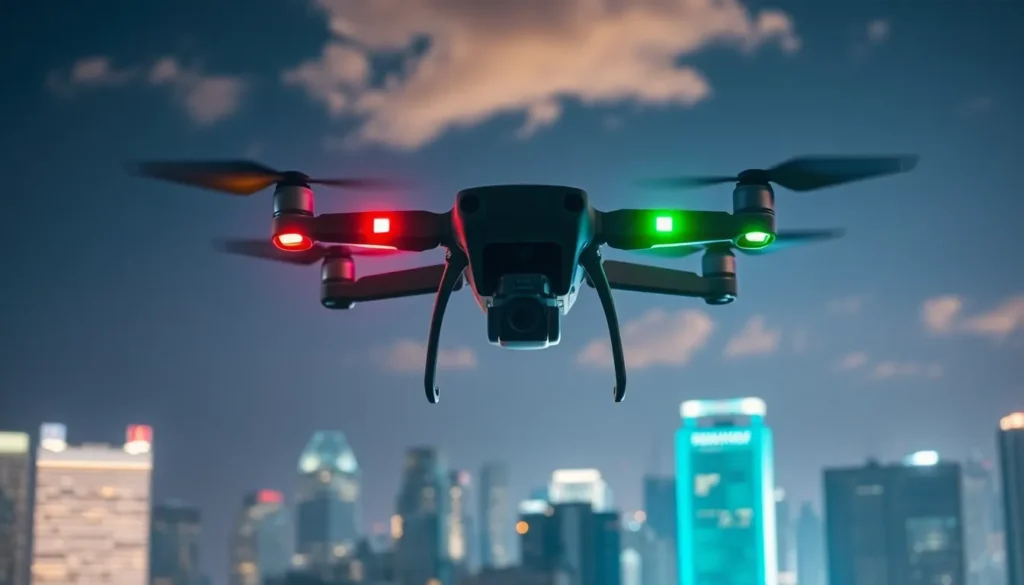
Drones are the marvels of modern technology, but you might be wondering, do drones have red and green lights? If you’ve ever gazed skyward at night, trying to distinguish a drone from a low-flying UFO, you’re not alone. Drones zooming overhead spark our curiosity. Those colorful lights flashing in the dark, are they merely for show or do they serve a purpose? Let’s jump into the exciting world of drone navigation lights and unearth the facts.
Understanding Drone Navigation Lights
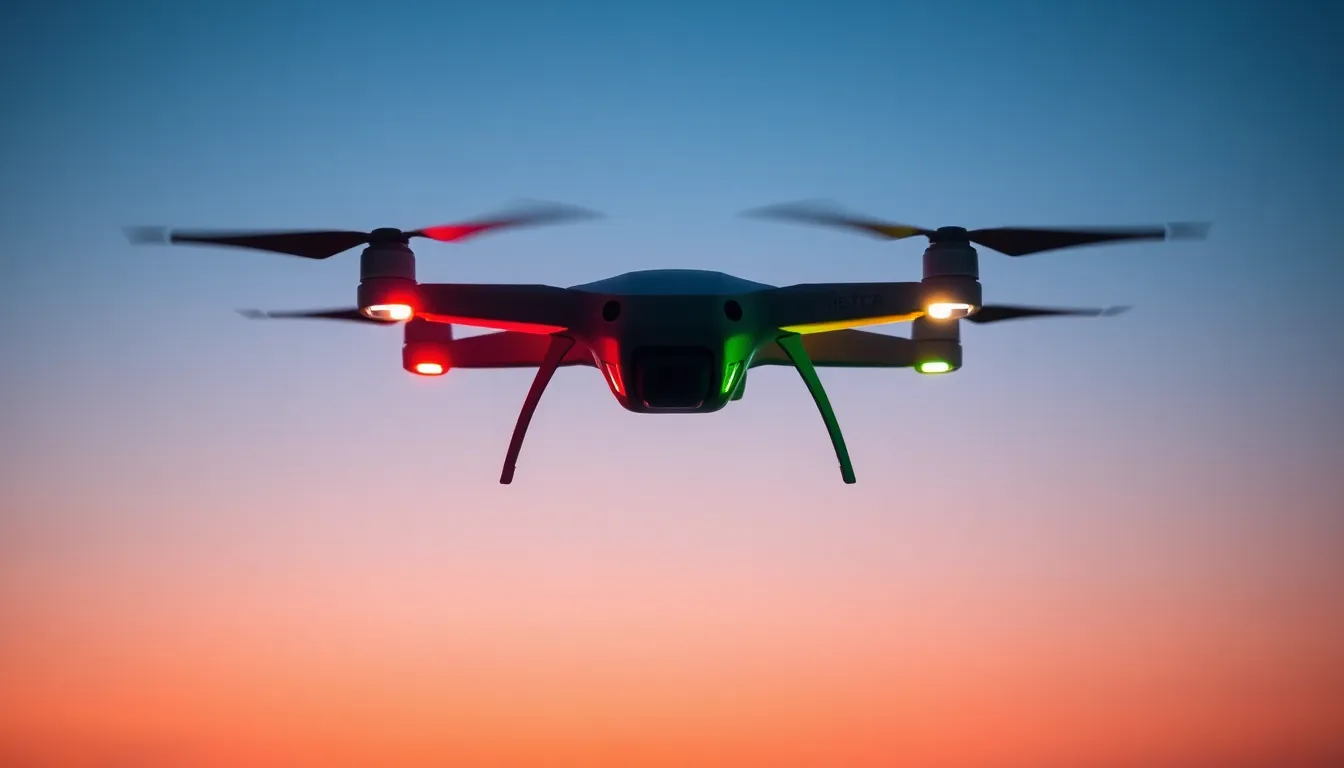
Navigation lights on drones help pilots maintain visibility and orientation. Typically, these lights include red, green, and white LEDs, all crucial for nighttime operations. The red light is usually positioned to the left (port side) of the drone, while the green light is on the right (starboard side). This color-coding mimics traditional aviation rules and helps other airspace users spot them easily. When flying, drones must adhere to these guidelines to ensure both safety and compliance with aviation standards.
Importance Of Red And Green Lights
The presence of red and green lights on drones is not just for aesthetics: they serve a critical role in air safety. These lights indicate the orientation of the drone in the sky. The red light showing on the left signals to observers that the drone is approaching from the left side, while the green light does the same from the right. This is essential in preventing mid-air collisions, especially in busy airspace where multiple drones or aircraft might be operating simultaneously. Also, these navigation lights assist the drone operator in keeping track of their unit’s position even in low visibility conditions.
Common Regulations And Standards
Drone operations are subject to a variety of regulations, which include stipulations around navigation lights. In the United States, the Federal Aviation Administration (FAA) mandates that commercial and recreational drones must use lighting systems compliant with the guidelines that govern manned aircraft. The FAA regulations specify that drones operating after dark are required to have anti-collision lights. These regulations help ensure that each drone is visible to other pilots and air traffic, so greatly minimizing the chances of accidents.
Types Of Drones That Use Navigation Lights
Not every drone comes equipped with red and green navigation lights. But, many commercial and recreational drones do. High-end models from manufacturers like DJI, for example, often include sophisticated lighting systems to assist in navigation and safety. In contrast, toy drones, which are meant for indoor use or short-range flying, typically lack these lights. Specialized drones, such as those used in law enforcement or military applications, may also feature enhanced lighting for tactical use. The type of drone will often dictate whether or not it possesses these important visual indicators.
How To Identify Drone Lights At Night
When observing a drone at night, identifying the lights can be fairly straightforward. Look for the characteristic two color lights, red and green, flashing in unison. The rhythm and sequence of the light pattern can provide clues to the type of drone and its operation. For example, a steady white light combined with the colored lights indicates the drone is actively navigating, while flashing in various sequences may suggest it’s remaining stationary or returning to its launch point. Pay attention to the positioning of the lights to ascertain the drone’s direction and ensure safety.