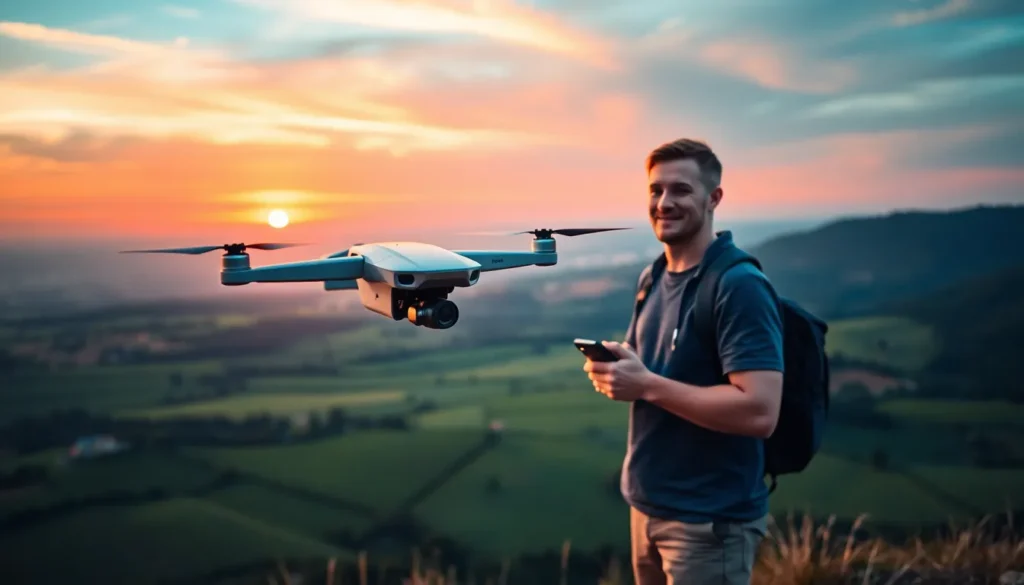
Aerial videography drones are transforming the way we capture the world around us. Gone are the days of lugging around heavy cameras and climbing trees for that perfect shot. Now, with just a few taps on a smartphone, anyone can soar high above the landscape and film breathtaking scenes that’ll make friends green with envy.
Overview of Aerial Videography Drones
Aerial videography drones play a crucial role in modern filmmaking and photography. Equipped with advanced stabilization technology, these drones capture high-quality footage from unique angles. Users benefit from the ease of operation and accessibility that drones provide.
Numerous models exist, ranging from beginner-friendly options to sophisticated units used in professional productions. Consumers can find drones equipped with 4K cameras, enabling stunning video resolution. Specific features often include GPS stabilization, obstacle avoidance, and long battery life, enhancing usability and safety.
Companies like DJI and Autel Robotics lead the market in aerial videography drones. Their products cater to various needs, whether for a hobbyist capturing a sunset or a professional filmmaker producing cinematic content. Each drone’s performance often hinges on its design, flight time, and control range.
Several applications showcase the capabilities of aerial videography drones. Real estate agents utilize these drones to create captivating property videos that draw potential buyers. Filmmakers incorporate aerial shots in movies to provide breathtaking vistas. Furthermore, outdoor enthusiasts enjoy capturing their adventures from unique perspectives.
Advancements in drone technology continue to evolve. Software updates and improved camera systems enhance functionality, allowing users to achieve even greater creativity. Regulations regarding drone use also influence how users operate their devices, ensuring safety and legality in various environments.
Types of Aerial Videography Drones
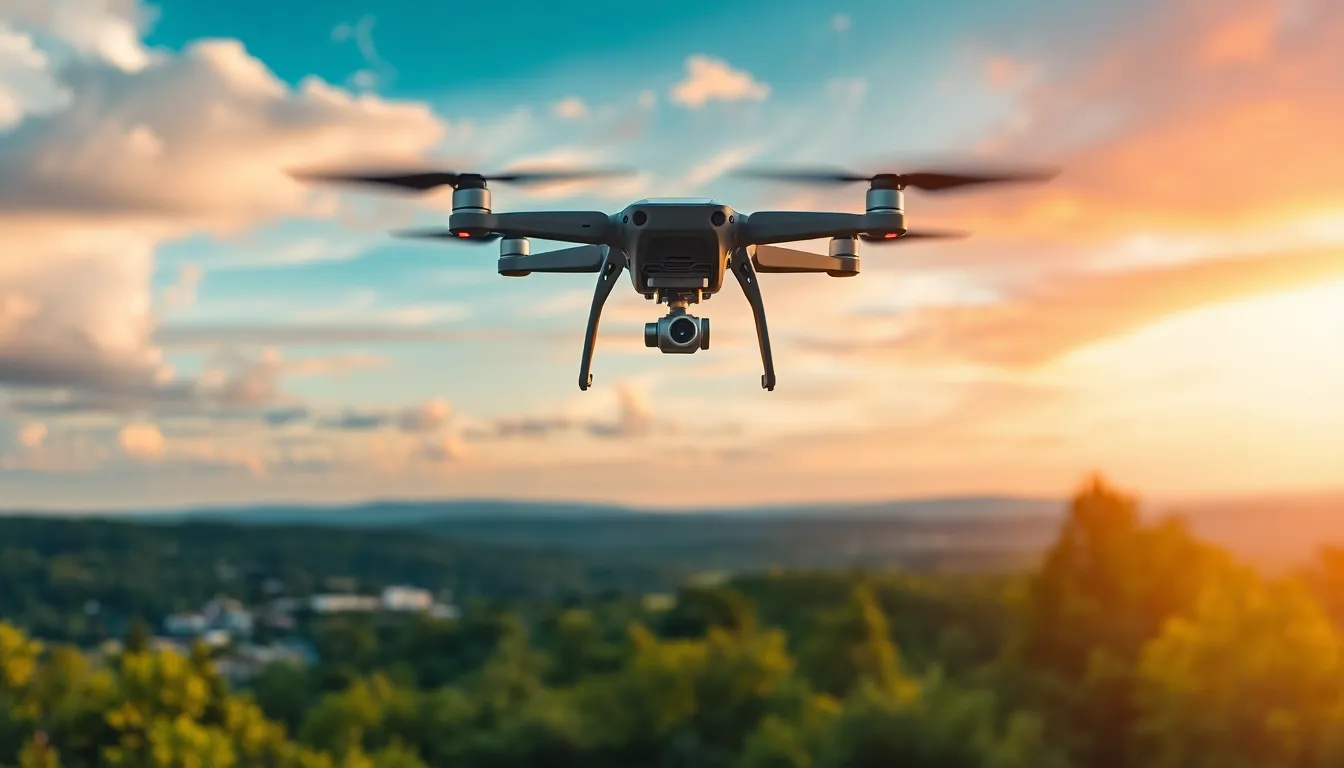
A wide variety of aerial videography drones exist, each suited to specific needs and skill levels. Understanding these types helps users select the right one for their projects.
Consumer Drones
Consumer drones cater to hobbyists and casual users. These models often come with integrated cameras capable of shooting 1080p or 4K video. Ease of use defines their design, allowing novices to capture stunning footage with minimal training. Examples include the DJI Mini series and the Parrot Anafi. Generally, these drones feature automated flight modes, GPS stabilization, and obstacle avoidance systems. Battery life averages between 20 to 30 minutes, enabling ample time for capturing the desired shots.
Professional Drones
Professional drones serve filmmakers and serious videographers. Equipped with advanced cameras, these models support higher resolutions, often exceeding 4K. Complex features like gimbal stabilization ensure smooth footage during dynamic movements. Companies like DJI, with the Inspire series, and Autel Robotics lead in providing high-quality options. These drones usually allow for manual control, enabling precise adjustments for capturing cinematic shots. Flight times extend to 30 minutes or more, and payload capacities often accommodate additional camera gear or accessories, enhancing versatility for professionals.
Key Features to Consider
Key features define the effectiveness of aerial videography drones. Understanding these aspects enhances the flying experience and improves the quality of captured footage.
Camera Quality
Camera quality remains a critical factor in selecting a drone. High-resolution sensors contribute to stunning images and videos. Drones boasting 4K cameras, such as those from DJI, deliver vibrant colors and sharp details. Gimbal stabilization further ensures smooth footage, even in windy conditions. Many models include features like zoom capabilities and adjustable aperture settings, which allow for creative filming from various perspectives. Users benefit from investing in drones with superior lens quality, as it significantly impacts the final output.
Flight Time and Range
Flight time and range play essential roles in a drone’s usability. Most consumer drones offer flight times between 20 and 30 minutes per battery charge, while professional models can exceed this limit. Longer flight times facilitate capturing extensive footage without frequent interruptions. Range defines how far the drone can operate from the pilot. Typically, consumer drones have a control range of around 1 to 3 miles, whereas professional drones can reach 5 miles or more. Evaluating these features aligns user needs with practical applications, such as real estate or landscape filming.
Benefits of Aerial Videography Drones
Aerial videography drones offer numerous advantages for capturing stunning visuals. Enhanced flexibility allows operators to film in various environments, reaching heights and angles that traditional methods can’t. This innovation increases creative potential for filmmakers and photographers, enabling them to create captivating perspectives.
Access to high-quality imagery and video is another significant benefit. High-resolution cameras, often 4K or better, ensure that the final product meets professional standards. Gimbal stabilization further improves footage quality by minimizing shake and ensuring smooth recordings during flight.
Cost-effectiveness represents a vital factor. Owning a drone can be more affordable than hiring a helicopter for aerial shots. With consumer models starting under $500, aspiring filmmakers can invest in tools that enhance their work without breaking the bank.
Time efficiency plays a crucial role in project execution. Aerial drones capture expansive shots in much shorter periods than conventional filming methods. Drones quickly cover large areas, drastically reducing production timelines, which can be essential for tight deadlines.
Safety is another considerable advantage. Aerial drones minimize the risks associated with human-operated filming on heights or difficult terrains. By allowing individuals to film from a safer distance, drones reduce the likelihood of accidents.
Versatility in applications stands out. Aerial videography drones serve various industries, from real estate marketing to agriculture and event coverage. Filmmakers can leverage these devices to generate unique content that captivates audiences across different platforms.
User-friendly technology encourages more individuals to engage with aerial videography. Beginner-friendly models support novices, as many come pre-programmed with flight modes that simplify piloting. The continued development in drone features enhances accessibility for both hobbyists and seasoned professionals alike.
Challenges and Limitations
Aerial videography drones face several challenges and limitations that users encounter in the field. Weather conditions significantly impact performance. Rain, high winds, and extreme temperatures can hinder flight capabilities and reduce video quality.
Battery life also poses a concern. Most consumer drones operate between 20 to 30 minutes on a single charge, limiting extended shoots. Professionals may require extra batteries or rapid charging solutions to maximize shooting time.
Regulatory hurdles exist as well. Operating drones requires adherence to local laws, which can restrict where and how they can be flown. Obtaining permissions for commercial use complicates filming projects, especially in populated areas.
Another limitation includes the technical skills required for effective operation. While user-friendly drones cater to beginners, mastering advanced features and capturing cinematic sequences demands practice. Videographers may face a learning curve before achieving desired results.
Privacy issues arise with drone photography. Capturing images in residential areas can lead to legal disputes and ethical dilemmas regarding consent. Navigating these concerns is vital for responsible drone use.
Finally, potential equipment failures can lead to unexpected setbacks. Mechanical or software malfunctions may cause drones to crash, resulting in loss of footage and the need for costly repairs. Ensuring regular maintenance and updates can help mitigate these risks.
Understanding these challenges allows users to anticipate and address limitations, optimizing their aerial videography experience.
Aerial videography drones have revolutionized the way people capture stunning visuals from the sky. With their advanced technology and user-friendly designs, these drones empower both amateurs and professionals to create high-quality content effortlessly. The versatility of aerial drones opens up endless possibilities across various industries, enhancing creativity and efficiency.
While challenges like weather conditions and regulatory hurdles exist, understanding these limitations helps users navigate the aerial videography landscape more effectively. As technology continues to advance, the potential for breathtaking aerial footage will only grow, making it an exciting time for anyone interested in exploring this dynamic field. Embracing aerial videography drones can elevate storytelling and capture the world from a truly unique perspective.