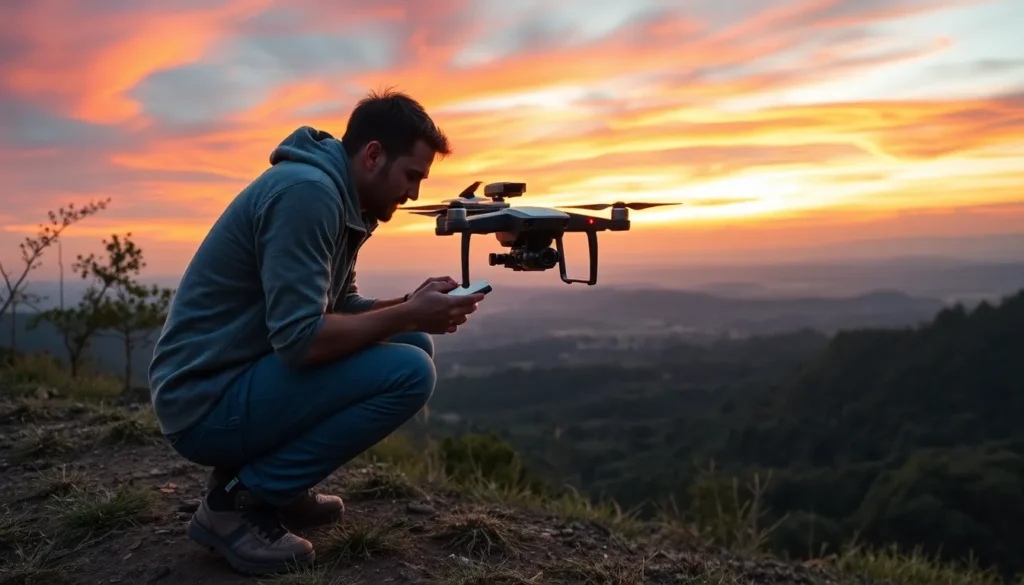
In a world where every filmmaker dreams of capturing breathtaking shots, drones have swooped in like superheroes, transforming the way stories are told. Gone are the days of relying solely on cranes and steady cams; now, a trusty drone can glide effortlessly through the air, offering stunning aerial perspectives that leave audiences in awe.
Overview of Drones for Filmmaking
Drones significantly enhance the filmmaking process by offering unique perspectives and dynamic shots. These devices enable filmmakers to achieve high-quality aerial footage that was once difficult or impossible to capture. Advanced stabilization technology ensures smooth imagery, reducing unwanted shake and jitter.
Multiple types of drones exist for various filmmaking needs, including quadcopters and hexacopters. Quadcopters, with their four rotors, provide stability and precision, while hexacopters are ideal for carrying heavier camera equipment. Each type serves a distinct purpose in filming.
Camera compatibility is essential when selecting a drone for filmmaking. Many drones support popular cameras like the Canon EOS series and Sony Alpha cameras. This compatibility allows filmmakers to leverage existing equipment to enhance their projects.
Cost ranges widely among filmmaking drones, catering to different budgets. Entry-level options priced around $300 suit hobbyists, while professional drones can exceed $5,000. Investing in quality gear ensures better performance and longevity.
Safety regulations impact drone usage in filmmaking. Filmmakers must adhere to Federal Aviation Administration (FAA) guidelines, including obtaining necessary permits for commercial use. Taking safety measures seriously not only fosters compliance but also protects crew and equipment.
Impressive features such as obstacle avoidance and real-time data transmission add value to filmmaking drones. Obstacle avoidance systems prevent collisions, while real-time data transmission allows for immediate feedback during shoots. These technological advancements streamline the filmmaking process and enhance creative possibilities.
Drones are transforming the landscape of modern filmmaking, making breathtaking visuals achievable for creators of all levels. As technology evolves, they continue to push the boundaries of aerial cinematography, inspiring filmmakers to explore new storytelling techniques.
Types of Drones Used in Filmmaking
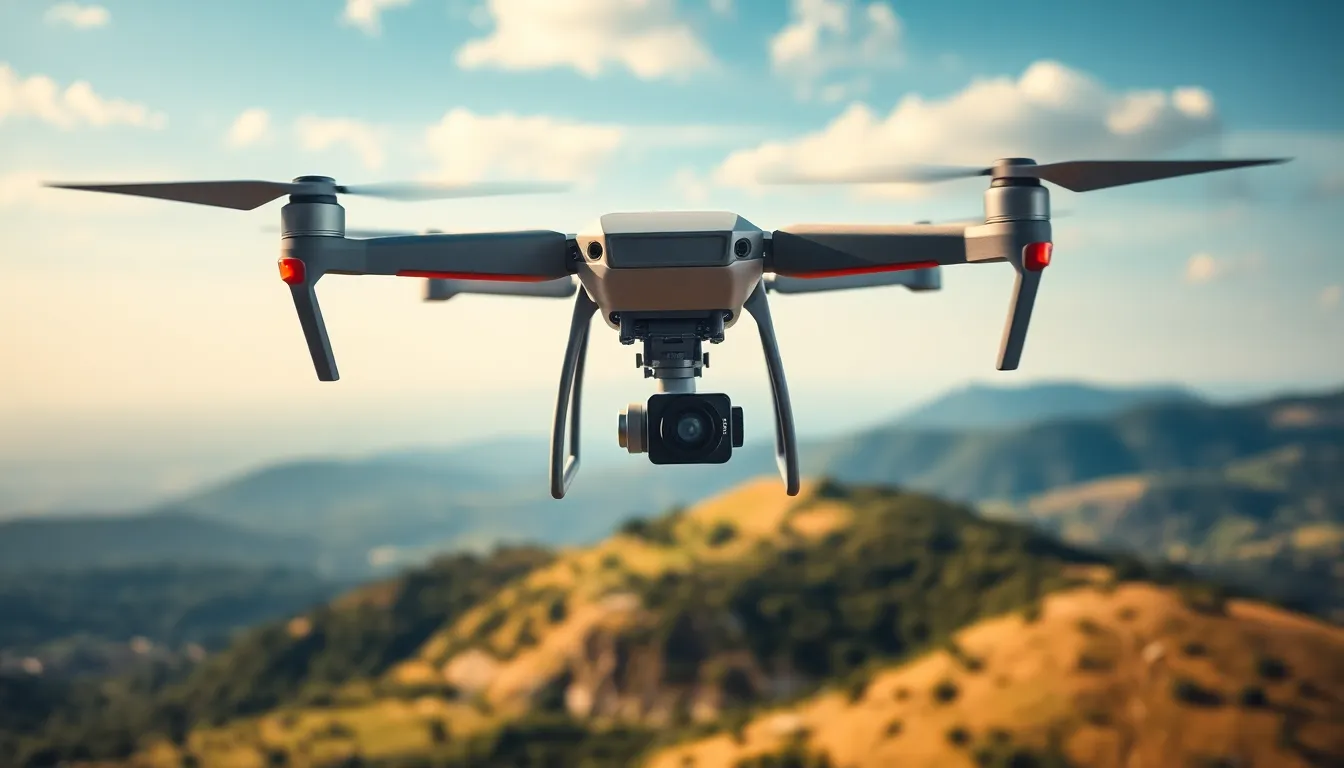
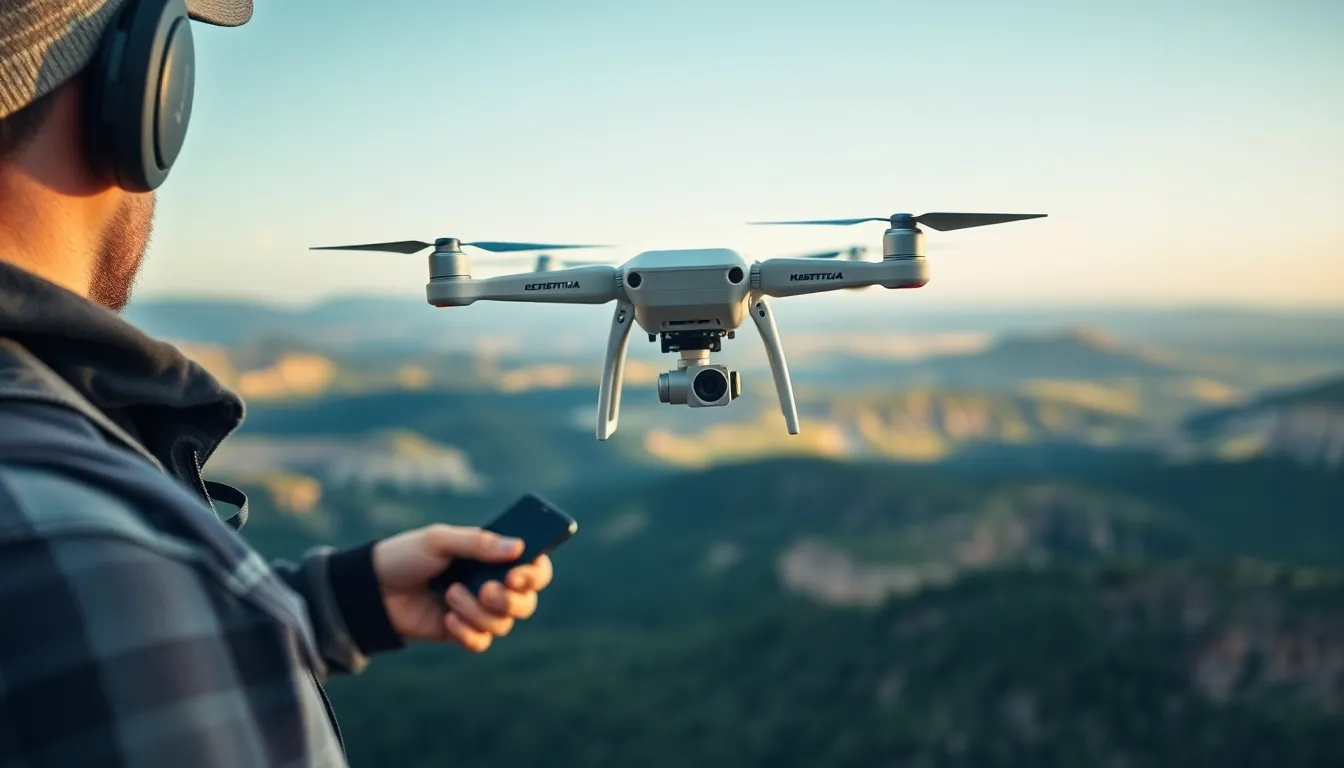
Drones come in various types, each designed to cater to different filmmaking requirements. Understanding these types helps filmmakers select the right tool for their projects.
Consumer Drones
Consumer drones serve as accessible options for amateur filmmakers and hobbyists. These drones typically feature built-in cameras capable of capturing high-definition footage. Models like DJI Mini or Mavic Air are popular choices among creators seeking affordability and ease. Their lightweight design enhances portability, making it simple to shoot in various locations. Battery life usually lasts between 20 to 30 minutes, allowing for several short filming sessions. Many consumer drones come with user-friendly apps, enabling quick editing and sharing of content.
Professional Drones
Professional drones offer advanced filming capabilities for serious filmmakers. These drones support higher-end cameras, allowing for exceptional image quality and versatile shooting angles. The DJI Inspire series stands out due to its dual-operator function, which enables separate control of camera angles and drone movement. Robust stability and high wind resistance are key features that enhance aerial footage in challenging environments. Additionally, most professional drones include advanced features like live broadcasting and obstacle avoidance systems, which streamline production workflows. Filmmakers often invest in these drones for extensive projects requiring superior visual storytelling.
Key Features to Consider
Choosing the right drone for filmmaking requires careful consideration of several key features.
Camera Quality
Camera quality plays a crucial role in capturing stunning visuals. High-resolution capabilities, such as 4K or even 8K video, provide filmmakers with the detail needed for professional projects. Lens options also matter, as they affect focal length and aperture, impacting depth of field and low-light performance. A gimbal stabilizer further enhances image quality by eliminating shaky footage during flight. Filmmakers should prioritize drones that support interchangeable lenses for more creative flexibility.
Flight Time and Range
Flight time and range significantly influence shooting opportunities during a project. Typical consumer drones offer 20 to 30 minutes of flight time on a full charge. However, professional models can provide extended battery life, allowing for longer shooting sessions. Range is equally important; many drones can operate up to several miles away from the pilot, ideal for expansive landscapes or dynamic action shots. Filmmakers should assess their specific shooting needs to select the best flight time and range.
Stability and Control
Stability and control directly affect the quality of aerial footage. Drones equipped with advanced stabilization systems ensure smooth and steady shots, even in windy conditions. Pilots benefit from intuitive control systems, which allow for precise maneuvering during filming. Additionally, features like GPS hold and return-to-home increase safety and reliability when capturing complex scenes. It’s wise for filmmakers to choose drones with exceptional flight control capabilities to enhance their production quality.
Best Drones for Filmmaking in 2023
Drones have become essential tools in filmmaking, providing both amateurs and professionals with unique aerial perspectives. Here are the top choices categorized by their price and capabilities.
Entry-Level Options
Consumer drones offer affordable solutions for novice filmmakers. The DJI Mini is a favorite due to its lightweight design and impressive 4K camera. Mavic Air also stands out, featuring a compact design and user-friendly app for easy sharing. Battery life ranges between 20 to 30 minutes, making them suitable for short shoots. Each drone comes equipped with intuitive controls that help beginners master flying techniques quickly. These options prioritize accessibility while delivering quality footage for personal projects.
High-End Choices
Professional filmmakers require advanced capabilities that high-end drones provide. The DJI Inspire series excels in this category, featuring a dual-operator function for seamless collaboration. With support for interchangeable lenses, it accommodates diverse filming styles and needs. Exceptional stability and advanced features like live broadcasting enhance production value significantly. Increased flight times and operational ranges allow for longer, more detailed shots in various environments. High-end models often include obstacle avoidance technology, ensuring safety during complex aerial maneuvers.
Tips for Filming with Drones
Filming with drones requires thoughtful preparation and creative techniques for stunning results. Implementing strategies can enhance overall production quality.
Pre-Flight Planning
Pre-flight planning involves several crucial steps. First, select an appropriate filming location free from obstacles, ensuring safety and compliance with FAA regulations. Second, check local weather conditions for wind speed and visibility; unfavorable weather impacts drone performance. It’s wise to scout the area beforehand, identifying ideal angles and highlights. Incorporating battery management is essential, as planning for multiple flight sequences with spare batteries extends filming time. Finally, program waypoints in advance if available, allowing for smooth automated shots and minimizing pilot workload.
Shot Composition Techniques
Shot composition techniques significantly affect visual storytelling. Begin with establishing shots; these wide angles provide context. Utilize leading lines naturally found in landscapes to draw the viewer’s eye. Incorporating the rule of thirds enhances balance, positioning points of interest along grid lines. Aerial shots reveal patterns in nature or urban landscapes, showcasing the scene’s scale. Experimenting with different altitudes and angles can yield dynamic footage. Lastly, incorporating movement into shots, such as orbiting or diving, adds depth and excitement, keeping audiences engaged.
Drones are undeniably reshaping the landscape of filmmaking. They offer filmmakers unparalleled access to stunning aerial perspectives that enhance storytelling and visual appeal. With a range of options available from consumer-friendly models to professional-grade equipment, there’s a drone suited for every budget and skill level.
The advancements in technology have made it easier than ever to capture high-quality footage. Filmmakers can now focus on creativity and innovation while relying on drones to deliver exceptional results. As they continue to evolve, drones will undoubtedly play a crucial role in the future of cinematography, pushing the boundaries of what’s possible in visual storytelling.