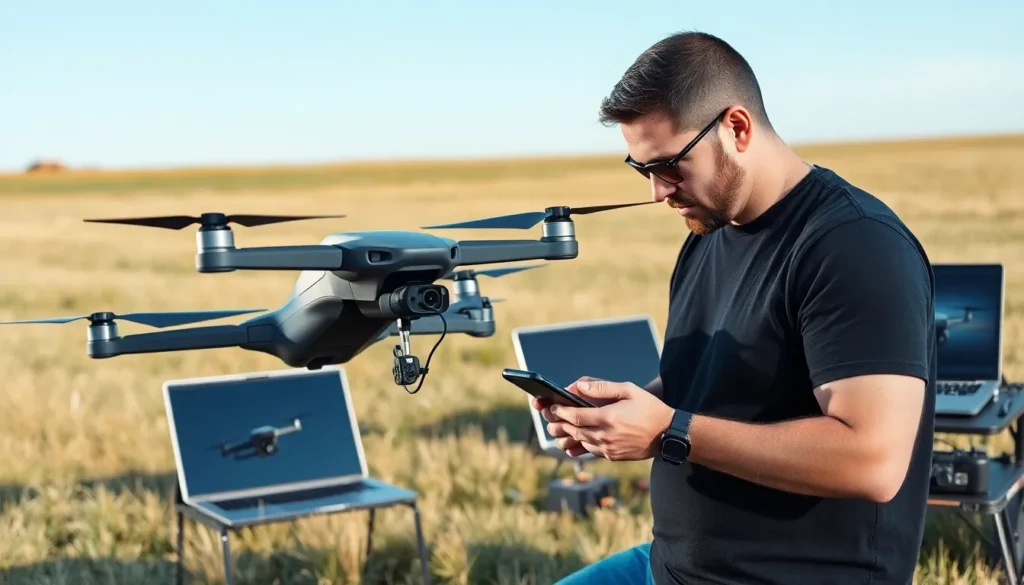
Betaflight tuning might sound like a fancy term reserved for rocket scientists, but don’t let it intimidate you. It’s the secret sauce that turns a good drone into a great one. Imagine your quadcopter soaring through the sky like it’s auditioning for a role in a Hollywood blockbuster. With the right tuning, it can handle sharp turns and sudden drops like a pro, leaving your friends in awe and your rivals eating your dust.
Understanding Betaflight Tuning
Betaflight tuning plays a critical role in optimizing drone performance. By understanding its components, a pilot can achieve smooth flight and precise control.
What Is Betaflight?
Betaflight represents an open-source firmware specifically crafted for multirotor drones. Pilots utilize it to configure and customize their drones’ flight characteristics. It supports various flight modes and tuning parameters, enhancing the overall flying experience. Advanced features such as telemetry and black box logging allow for real-time monitoring and feedback. Many enthusiasts prefer Betaflight for its adaptability and extensive community support.
Importance of Tuning in Drones
Tuning significantly impacts a drone’s responsiveness and maneuverability. Proper adjustments lead to improved stability during flight. Customizing PID settings enables pilots to fine-tune throttle, pitch, and yaw behaviors. Increased agility attracts competitive pilots seeking sharper turns and rapid recoveries. Beyond performance, effective tuning enhances safety by reducing the likelihood of crashes. Each drone benefits from unique tuning, as varying conditions and pilot preferences influence performance. Realizing optimal flight characteristics relies on attention to tuning details.
Preparing for Tuning

Before diving into Betaflight tuning, having the right tools and equipment ensures a smooth process.
Tools and Equipment Needed
Pilots need essential tools for effective tuning. A laptop or smartphone running the Betaflight Configurator app is crucial for accessing and modifying settings. USB adapters facilitate connecting the drone to the device. A reliable battery ensures sufficient power during tuning sessions. PID tuning requires a flight simulator as a testing ground for adjustments. These simulators help assess changes safely before applying them in real-world conditions. Additionally, a LiPo battery charger and a propeller wrench aid in managing the drone’s power supply and propeller adjustments.
Initial Setup Steps
Start with checking the firmware version on the drone. Ensuring compatibility with the latest Betaflight firmware optimizes performance. Follow with configuring basic settings like flight modes and rates. Set up the controller and verify the correct input for pitch, roll, and yaw. Calibration of the accelerometer and gyroscope lays the foundation for accurate flight. Adjust the receiver settings to match the transmitter, ensuring seamless communication. Completing these steps prepares the drone for effective tuning, setting the stage for improved performance.
Key Tuning Parameters
Understanding the key tuning parameters within Betaflight is crucial for optimizing drone performance. Proper adjustments in these areas lead to enhanced flight characteristics.
PID Tuning
PID tuning focuses on three components: Proportional, Integral, and Derivative values. Proportional values influence the responsiveness of the drone, adjusting how quickly it reacts to control inputs. Integral values help eliminate steady-state errors, ensuring consistent flight even with disturbances. Derivative values predict future errors, stabilizing flight after rapid changes. Adjustments often require careful testing, correlating desired behaviors with actual performance. Incremental changes lead to optimal settings tailored to specific flying styles.
Rates and Expo
Rates and expo settings significantly affect how a drone responds to pilot inputs. Rates determine the speed of rotation for roll, pitch, and yaw. Increasing rates leads to faster movements, suitable for experienced pilots. Expo settings adjust the sensitivity of throttle inputs, offering smoother responses around center sticks. Higher expo values allow for gentle control during stable flight while maintaining agility at extreme angles. Finding the right combination is essential for achieving a balance between control and responsiveness.
Filter Settings
Filter settings play a vital role in stabilizing flight and improving responsiveness. Low-pass filters help reduce vibrations, ensuring smoother operation during maneuvers. The dynamic notch filter targets specific frequencies from motor noise, enhancing overall stability. Adjusting these settings can significantly impact how well the drone handles during acrobatic maneuvers or challenging conditions. Regular monitoring and fine-tuning of filter parameters keep drones operating optimally against environmental variables.
Advanced Tuning Techniques
Advanced techniques improve drone performance significantly. Fine-tuning settings can make a difference in control and responsiveness.
Betaflight OSD Configuration
Betaflight’s On-Screen Display (OSD) customization enhances pilot awareness during flight. Users can display critical information such as battery voltage, flight time, and receiver signal strength. Configuring OSD settings allows pilots to tailor the display to their preferences, ensuring access to relevant data at a glance. Specific options include font size adjustments and element positioning, which can be tweaked using the Betaflight Configurator. Effective OSD use helps pilots monitor drone performance in real-time, directly influencing flying experience.
Tuning for Different Flight Styles
Tuning parameters should match individual flight styles for optimal performance. Racing pilots may prioritize rapid response and agility, adjusting rates and PID values for quick maneuvers. In contrast, smooth flying enthusiasts often focus on stability and slow-speed control, leading to softer PID settings and refined filters. Specific flight modes, such as Acro or Angle mode, also require distinct tuning approaches to accommodate varying pilot techniques. Recognizing personal flying preferences aids in achieving a drone that performs exceptionally under specific conditions.
Common Tuning Challenges
Tuning a drone can present various challenges that impact performance. Pilots often encounter issues that affect flight stability and control.
Troubleshooting Flight Issues
Identifying flight issues helps enhance quadcopter performance. Pilots may notice drifting, oscillations, or poor responsiveness during maneuvers. Adjusting PID values can often mitigate oscillations; increasing the derivative gain may stabilize flight. For drifting problems, ensuring proper magnetic calibration and receiver settings is essential. Additionally, reviewing filter settings improves response to inputs, addressing vibrations that cause instability. By systematically testing each parameter, pilots can achieve smoother flight characteristics.
Avoiding Over-Tuning
Finding the right balance in tuning prevents over-tuning complications. Too much sensitivity in control settings can lead to erratic flight behaviors. Pilots should start with conservative adjustments, gradually increasing values while observing performance. Focusing on settings that align with flying style enhances maneuverability without compromising stability. Moreover, frequent testing in safe environments allows pilots to gauge responses accurately, ensuring that tuning supports desired flight dynamics. Avoiding over-tuning maintains a balanced, responsive quadcopter, optimizing performance for both speed and stability.
Betaflight tuning is a vital process for any drone pilot looking to elevate their flying experience. With the right adjustments and understanding of key parameters pilots can achieve remarkable performance improvements. This meticulous tuning process not only enhances responsiveness and stability but also tailors the drone’s behavior to individual flying styles.
Embracing the intricacies of Betaflight allows pilots to unlock their drone’s full potential. By regularly monitoring and fine-tuning settings pilots can ensure optimal performance in various conditions. Whether for racing or leisurely flights the rewards of dedicated tuning are undeniable, resulting in a more enjoyable and impressive flying experience.