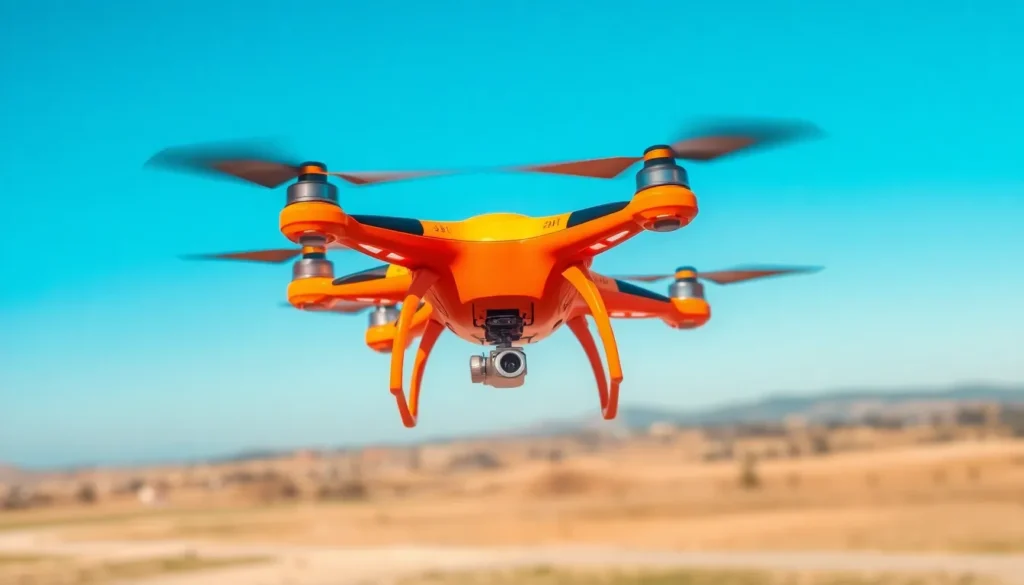
In a world where technology soars to new heights, 2.4GHz drones are the unsung heroes of the skies. These flying wonders offer a perfect blend of range and reliability, making them a favorite among hobbyists and professionals alike. Imagine piloting a drone that can zip through the air like a caffeinated squirrel, all while maintaining a solid connection. That’s the magic of 2.4GHz!
Overview of 2.4GHz Drones
2.4GHz drones play a crucial role in modern technology, offering impressive communication ranges and reliable connections. These drones capture the interest of both hobbyists and professionals alike.
Definition and Functionality
2.4GHz drones operate within the 2.4GHz frequency band, facilitating wireless communication. This frequency enables remote control and data transmission between the drone and the controller. When flying, these drones showcase excellent agility and can handle diverse environments. Additionally, their ability to maneuver quickly enhances overall functionality, making them suitable for various applications, including aerial photography and racing.
Benefits of 2.4GHz Technology
2.4GHz technology provides several advantages for drone operation. First, it significantly reduces interference from other wireless devices, ensuring clearer communication. The extended range, typically up to several kilometers, allows users to explore vast areas without losing control. Furthermore, drones using this frequency boast longer battery life when compared to others. Cost-effectiveness often emerges since many consumer-grade appliances utilize the 2.4GHz spectrum, making compatibility with accessories easier.
Popular 2.4GHz Drones on the Market
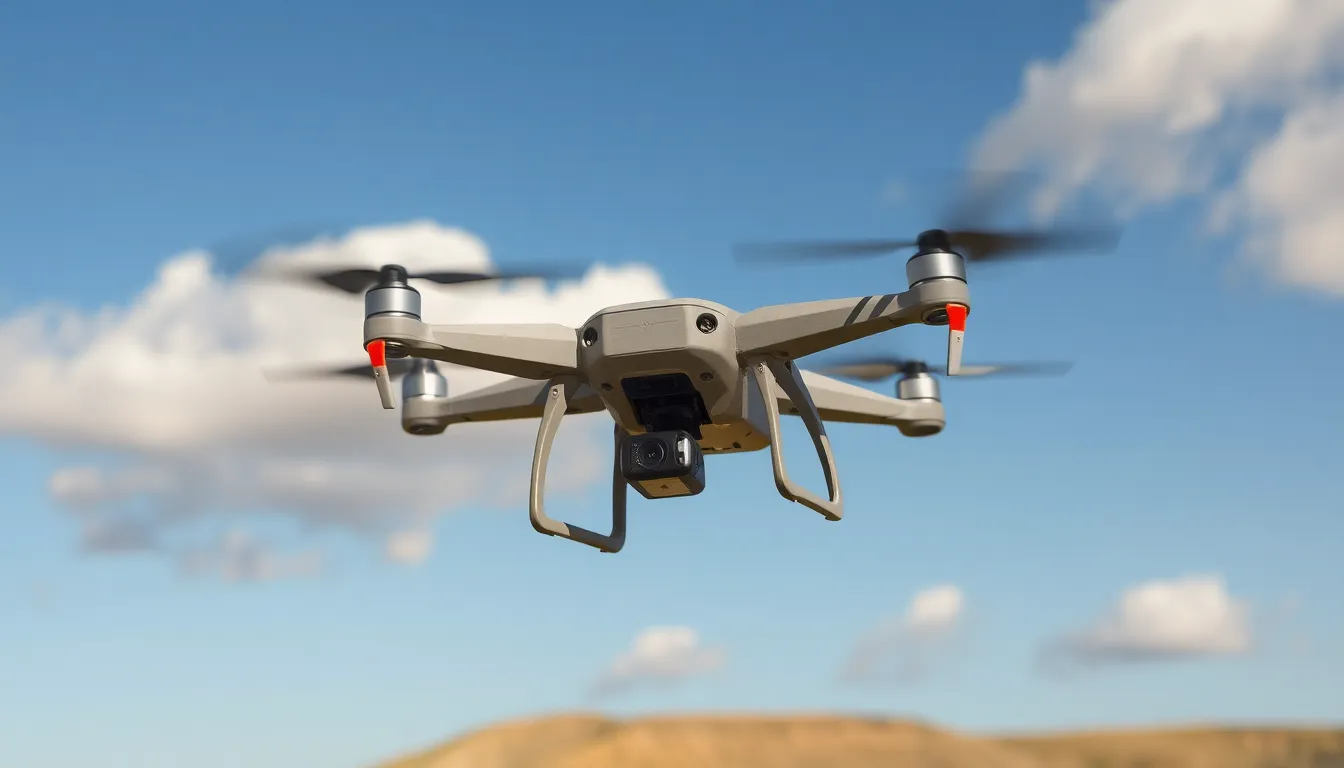
Several 2.4GHz drones stand out in the market for their robust features and performance. These models cater to both hobbyists and professionals, offering a wide range of functionalities.
Features of Top Models
Leading 2.4GHz drones typically showcase advanced stabilization systems, ensuring smooth flight. Models often include high-resolution cameras for aerial photography, allowing for stunning images and videos. Users appreciate drones with extended flight times, often ranging from 20 to 30 minutes, due to efficient battery designs. Agility remains a strong selling point, enabling seamless maneuvering in various environments. Many devices also feature robust range, often exceeding 1,000 meters, which enhances operational flexibility.
Price Range and Value
Pricing for 2.4GHz drones varies significantly, influenced by features and brand reputation. Budget models start around $50, while premium options can exceed $1,500. Mid-range drones, priced between $200 and $800, often provide excellent value, balancing features and reliability. Enhanced features tend to justify higher price tags, as advanced camera capabilities and flight controls attract serious enthusiasts. Discounts and seasonal promotions occasionally make premium models more accessible.
Applications of 2.4GHz Drones
2.4GHz drones feature a wide array of applications that cater to both recreational and professional sectors.
Recreational Uses
Recreationally, 2.4GHz drones are ideal for enthusiasts seeking thrilling experiences. Aerial photography captures breathtaking landscapes while racing drones provide exhilarating speeds. Many hobbyists enjoy building and customizing their own drones for unique flight experiences. Some users engage in drone competitions, showcasing piloting skills in regulated environments. The connection stability afforded by 2.4GHz technology enhances these activities by minimizing interference.
Professional and Industrial Applications
Professionally, 2.4GHz drones address various industrial needs effectively. Surveying and mapping are streamlined by using drones to gather topographical data efficiently. Agricultural monitoring benefits from real-time crop assessment, allowing farmers to optimize yields. In construction, drones provide aerial inspections that improve safety and efficiency. Furthermore, search and rescue operations utilize 2.4GHz drones to cover vast areas quickly and efficiently. Their reliability in transmitting data ensures accurate and timely information delivery in critical situations.
Limitations of 2.4GHz Drones
2.4GHz drones, while having many benefits, come with certain limitations that enthusiasts should consider.
Range and Signal Interference
Range typically extends to about 1.5 miles under optimal conditions. However, physical obstacles like buildings and trees can reduce this range significantly. Signal interference becomes a crucial factor as well, especially in urban areas where multiple devices operate on similar frequencies. Other wireless gadgets, such as Wi-Fi routers and microwaves, can disrupt the communication between the drone and its controller. Adverse weather conditions such as rain or wind might also impact signal stability, affecting flight performance.
Battery Life Considerations
Battery life varies by model, with many 2.4GHz drones offering flight times of 20 to 30 minutes. Longer flight durations might require larger battery capacities, which can add weight and reduce agility. The need for frequent recharging can interrupt prolonged flying sessions. Additionally, battery efficiency decreases in colder temperatures, leading to shorter operating times in winter conditions. Users should be aware that heavy payloads can, in turn, affect battery life, making it essential to balance performance and load.
2.4GHz drones represent a remarkable blend of technology and versatility. Their ability to navigate various environments while maintaining a strong connection makes them a top choice for both hobbyists and professionals. Whether capturing stunning aerial shots or engaging in competitive racing, these drones deliver impressive performance.
As the market continues to expand, users can find models that fit their needs and budgets. However, it’s crucial to consider factors like range limitations and battery life when selecting a drone. By understanding both the strengths and potential drawbacks, enthusiasts can make informed decisions that enhance their flying experience. With ongoing advancements in technology, the future of 2.4GHz drones looks promising, offering even more possibilities for innovation and exploration.